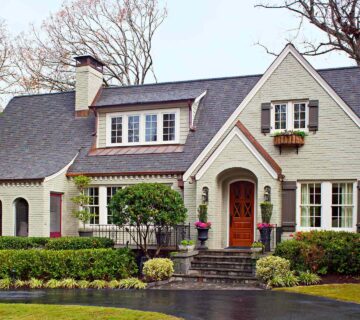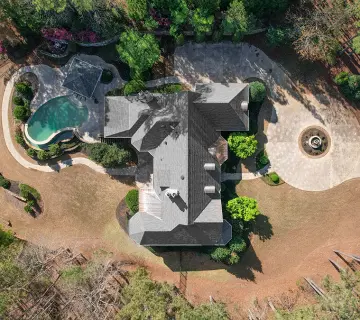


A homeowner off Haynes Bridge Road sent us photos of her roof last September with the specific question most Alpharetta property owners eventually face. Her 2008-vintage architectural shingles had some visible wear, a few patches where previous repairs had been done, some granule loss she’d noticed when cleaning her gutters, and a slow leak that had appeared in her guest bedroom ceiling after a summer thunderstorm. She wanted to know whether she needed another repair or whether her situation had crossed the threshold into replacement territory. The question of roof repair vs. roof replacement, which is right for your home, depends on specific factors that most homeowners don’t know how to evaluate honestly. Here’s the decision framework that produces the right answer for the specific property conditions actually in front of you.
Factor One: What Does the Roof Age Actually Tell You?
The first factor affecting repair-versus-replacement decisions is the roof’s age relative to its rated service life and the environmental conditions it has actually experienced.
The specific age considerations:
- Architectural asphalt shingles typically rated 25 to 30 years but often achieving 18 to 22 years in Georgia conditions
- Three-tab shingles rated 20 to 25 years but typically achieving 15 to 18 years in Metro Atlanta
- Premium luxury shingles rated 30 to 50 years with Georgia service life often reaching 25 to 35 years
- Metal roofing rated 40 to 70 years with substantial actual service life in Georgia conditions
- Tile roofing rated 50+ years though often requiring component replacement before structural replacement
- Flat roofing systems on commercial or specific residential applications with varying service lives by material
For Alpharetta properties specifically, the combination of hot humid summers, substantial UV exposure, periodic hail activity, and significant thunderstorm wind events produces faster roof wear than milder climates experience. A roof that might reach full warranty service life in Oregon often reaches end-of-life earlier in North Georgia.
For the Haynes Bridge Road homeowner, her 2008 architectural shingles were approaching 18 years at the time of her call. That age alone placed her in the window where replacement considerations become relevant, though age by itself doesn’t dictate the decision. It just shapes the question.
For roofs within the first 60% of their expected service life in Georgia conditions, repair is typically the appropriate response to specific issues. For roofs in the final 25% of expected service life, replacement considerations become more compelling even for situations that could technically be repaired.
Factor Two: What Does the Current Damage Scope Actually Look Like?
The second factor is the specific damage scope that triggered the current decision. Isolated issues typically warrant different responses than widespread conditions.
The specific scope indicators:
- Isolated single-location damage from a specific event like a tree branch impact typically indicates roof repair
- Multiple separate repair sites across the roof suggest systemic issues rather than isolated events
- Widespread granule loss across significant roof areas indicates service life approaching end
- Multiple previous repairs that have been accumulating suggest the roof is reaching repair-futility territory
- Flashing deterioration across multiple penetrations indicates systemic aging
- Underlayment exposure in multiple locations suggests comprehensive overlying failure
- Decking issues including soft spots or structural concerns typically indicate replacement-level scope
- Significant storm damage affecting substantial roof area often qualifies for insurance-supported replacement
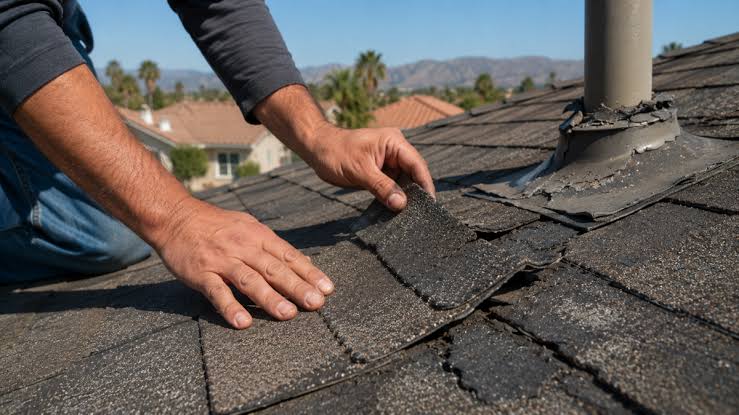
For the Haynes Bridge Road situation, her damage scope included the specific leak location plus multiple patches from previous repairs plus the granule loss she’d noticed. The scope wasn’t just the current symptom. It included patterns suggesting broader developing issues.
For Alpharetta property owners generally, the distinction between isolated issues and systemic conditions is often the most important single factor in the repair-versus-replacement decision. Repair of an isolated issue on an otherwise sound roof extends service life appropriately. Repair of symptoms on a roof approaching end-of-life delays the inevitable while allowing additional damage to accumulate.
Factor Three: What Does the Repair-vs-Replacement Economics Actually Show?
The third factor is the specific economic comparison between repair cost and replacement cost on the specific property, considering remaining service life.
The specific economic considerations:
- Repair cost ranges for Alpharetta properties typically run $400 to $3,500 depending on scope
- Replacement cost ranges for typical Alpharetta single-family properties typically run $18,000 to $45,000+ depending on size, materials, and complexity
- Remaining service life after repair affects whether the repair extends useful roof life meaningfully
- Cost-per-remaining-year calculation often reveals when repair stops making economic sense
- Insurance coverage potentially supporting replacement for storm-damaged roofs
- Energy efficiency improvements possible with replacement that repair can’t deliver
- Property value considerations including how roof condition affects both current property value and eventual sale pricing
- Financing options affecting whether replacement is practically accessible when economics support it
For roofs where repair would cost $2,500 and provide perhaps 2 to 3 years of remaining service, the repair economics work out to roughly $1,000 per year of extended service. For roofs where replacement would cost $30,000 and provide 25 years of service life, the replacement economics work out to roughly $1,200 per year. The specific comparison usually makes the decision clearer than homeowners expect.
For the Haynes Bridge Road situation, her repair quote came to approximately $1,800 but we estimated remaining service life of perhaps 3 years before significant additional issues would develop. Her replacement quote came to approximately $28,000 with 25-year expected service life. The per-year math pointed toward replacement rather than repair, though her specific situation involved additional considerations beyond pure economics.
Factor Four: What Do Insurance and Timing Considerations Add?
The fourth factor involves insurance implications and timing considerations that often change decisions that economics alone would suggest.
The specific insurance and timing considerations:
- Storm damage coverage potentially supporting replacement for roofs where damage can be documented as storm-caused
- Deductible considerations affecting out-of-pocket costs for insurance-supported replacement
- Policy renewal implications of significant claims or ongoing property conditions
- Timing urgency affecting whether specific weather windows should drive decision timing
- Material lead times affecting whether certain decisions must happen before specific weather arrives
- Current roof condition affecting whether delaying is practical or produces compounding problems
- Seasonal considerations for Alpharetta properties where some seasons favor projects more than others
- Insurance claim support affecting whether storm damage claims receive favorable determinations
For Alpharetta properties specifically, the active Metro Atlanta storm season produces specific insurance-supported replacement opportunities for homeowners whose roofs have been genuinely storm-damaged. Working with insurance assistance through contractors who understand the Georgia insurance environment often produces meaningfully different outcomes than homeowners attempting self-coordination.
For the Haynes Bridge Road homeowner, her situation included possible insurance implications since the specific leak had developed after a summer thunderstorm. Documentation and claim coordination identified that portions of her damage qualified for storm damage coverage, which significantly changed the net cost comparison between repair and replacement.

Factor Five: What Do Material and Warranty Considerations Add?
The fifth factor involves what the replacement option would actually include versus what the current roof provides, which affects whether replacement delivers meaningful value beyond simply restoring the existing situation.
The specific material and warranty considerations:
- Current material rating versus available replacement materials in the current market
- Warranty differences between current protection and available new warranties
- Material improvements in asphalt shingles, synthetic materials, or metal options
- Impact resistance ratings affecting both performance and insurance considerations
- Energy efficiency including reflective roofing options for Georgia summer conditions
- Aesthetic preferences affecting whether replacement provides opportunity for intentional updates
- Contractor warranty including workmanship coverage affecting long-term confidence
- Manufacturer certifications of specific contractors affecting warranty tiers available
For roof replacement specifically through GAF Master Elite certified contractors, warranty options available include coverage beyond what standard installation receives. These enhanced warranty options affect whether replacement delivers meaningful long-term protection beyond simply restoring the previous situation.
For the Haynes Bridge Road situation, her replacement option would upgrade from her 2008-vintage architectural shingles to current-generation GAF products with enhanced warranty options available through Master Elite installation. The specific protection difference contributed to her final decision.
How the Haynes Bridge Road Decision Actually Resolved
Combining all five factors for the Haynes Bridge Road homeowner’s situation produced a clear decision direction. Her roof age at 18 years placed her in replacement-consideration territory. Her damage scope included patterns suggesting broader developing issues rather than isolated conditions. Her per-year economics favored replacement over repair. Her insurance situation included supportable storm damage claim elements. Her replacement would deliver meaningful material and warranty improvements over her existing roof.
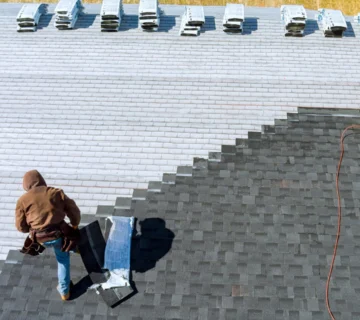
Her decision was replacement, executed in October 2026 with GAF HDZ architectural shingles, Master Elite installation, and warranty registration producing substantial long-term protection. Her out-of-pocket cost after insurance support came to approximately $9,200. The decision produced a 25-year protection horizon rather than the 2 to 3 years additional repair would have provided.
For other Alpharetta property owners facing similar questions, running honestly through the five factors typically produces similar clarity about the appropriate direction. Not every situation resolves the same way, but the framework produces answers specific to each property’s actual conditions.
What the Repair vs. Replacement Decision Actually Reduces To
The question of roof repair vs. roof replacement, which is right for your home, resolves through honest evaluation of roof age against Georgia service life, damage scope distinguishing isolated issues from systemic conditions, economic comparison on a per-remaining-year basis, insurance and timing considerations, and material and warranty value from replacement options. Alpharetta homeowners who evaluate their situations against these five factors consistently reach decisions that fit the actual conditions in front of them rather than defaulting to either reflexive repair or unnecessary replacement. The Haynes Bridge Road homeowner’s replacement decision reflected what the five-factor analysis showed. Other property owners whose situations show different patterns reach different conclusions through the same framework. The right answer depends on the specific property. The framework that reveals the right answer is consistent.
Get Honest Evaluation of Your Alpharetta Roof’s Situation
The team at Transcend Roofing Systems is ready to help. Contact us today for professional roof evaluation at your Alpharetta, GA property with the honest assessment, five-factor decision framework, GAF Master Elite certified installation if replacement is right, and insurance claim support that produces decisions matching your specific roof’s actual situation.