

A homeowner near Crabapple Road asked us the week before her roof replacement what she should actually expect once the crew arrived. She’d signed the contract three weeks earlier, scheduled around her kids’ school, and gotten the HOA approval squared away. But she realized she had no actual idea what the two days of the project would look like. Would there be noise all day? Would she need to leave the house? Would her landscaping survive? Would the inside of her house be okay? Her questions were reasonable, and they’re the same questions almost every Alpharetta homeowner has before their first roof replacement. Nobody watches a full roof replacement before they have one on their own house. Walking through what actually happens, in the order it happens, makes the whole experience less stressful and helps homeowners recognize whether their specific project is being handled well.
What the Crew Does Before Setting Up on the Roof
The actual work doesn’t start with climbing ladders. Before any shingles come off, qualified crews spend 30 to 60 minutes preparing the site in ways that protect the property and set up for efficient work.
The specific pre-work activities:
- Driveway protection with plywood or tarps where materials will stage and dumpsters will sit
- Landscape covering around the perimeter of the house using tarps that catch falling debris
- Window and door covering on vulnerable areas if the project includes extensive tear-off
- Attic access verification and interior preparation if attic work is scheduled
- Pool, patio, and outdoor furniture protection including moving items out of the fall zone
- Vehicle positioning to avoid damage from falling debris and to allow dumpster access
- Safety setup including fall protection anchors, ladder stabilizers, and ground-level safety perimeter
- Material staging positioning shingle bundles, underlayment rolls, and other materials for efficient access
- Dumpster positioning so tear-off debris can be loaded directly rather than handled multiple times
For Alpharetta properties specifically, this setup phase often includes HOA-related considerations like protecting shared landscape, respecting neighbor property boundaries during staging, and following any specific neighborhood guidelines about equipment placement.
For the Crabapple Road project, our crew spent about 45 minutes on setup before any climbing happened. That time looked like inactivity to the homeowner watching from her kitchen window. It was actually the work that prevented landscape damage, protected her patio furniture, and set up the rest of the day for efficient execution.
The Tear-Off Phase That Looks Dramatic but Follows a System
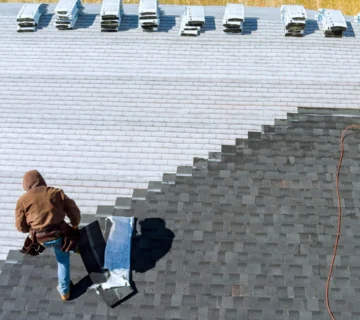
Once setup is complete, the actual tear-off begins. This is the most visually dramatic phase of a roof replacement, with shingles coming off in substantial volumes and debris moving to the dumpster. It’s also the phase that tells crews what they’re actually dealing with beneath the surface.
The specific tear-off activities:
- Systematic removal working from the ridge down and across the roof planes
- Decking inspection as each section is exposed, identifying any damaged or compromised areas
- Flashing removal at chimneys, skylights, valleys, and wall transitions
- Ventilation component removal including existing ridge vents, box vents, and turbines
- Pipe boot removal at plumbing stacks
- Drip edge assessment for condition and specification compliance
- Debris management keeping the site clear enough for safe work continuation
- Documentation of discoveries including photographs of any deck damage, rot, or structural issues found
For Alpharetta homes typically built between 1990 and 2010, tear-off often reveals deck condition that was perfectly adequate but shows wear worth addressing during the project. For older homes, more significant deck replacement may be needed. For newer construction, the deck is usually sound.
The Crabapple Road project revealed about 24 square feet of damaged decking around a chimney where a previous flashing failure had allowed sustained moisture. Addressing it during the project added about $600 to the final cost and about 90 minutes to the timeline. Addressing it as a separate project later would have cost significantly more. For residential roofing replacements generally, finding and addressing these issues during tear-off produces meaningfully better outcomes than discovering them during subsequent problems.

The System Rebuild That Actually Determines Service Life
With tear-off complete and the deck inspected, the rebuild phase begins. This is where the roof system that will serve the home for the next 20 to 30 years gets installed, and the specific work during this phase determines actual service life more than material selection does.
The specific rebuild sequence:
- Deck repairs addressing any damaged sections identified during tear-off
- Starter strips installed at eaves to establish the proper foundation for shingle rows
- Ice and water shield applied in vulnerable areas including eaves, valleys, and around penetrations
- Underlayment applied across the full roof surface, with synthetic materials now standard for quality installations
- Drip edge installed along all roof edges where it meets gutters or fascia
- Flashing installation at chimneys, skylights, walls, and all penetrations
- Shingle installation following manufacturer specifications for nailing pattern and exposure
- Valley details with specific techniques matching the shingle manufacturer’s valley approach
- Pipe boots installed at all plumbing stack penetrations
- Ridge cap installation completing the shingle work
- Ventilation installation including ridge venting and verification of soffit intake
For Alpharetta’s climate, specific details within this sequence matter significantly. Ice and water shield at eaves protects against ice dam situations that are rare but occur in cold snaps. Proper flashing at chimneys addresses the Georgia humidity that penetrates compromised flashing details. Ridge ventilation integrated correctly with soffit intake addresses the summer heat accumulation that reduces shingle life.
Working with contractors who treat each of these components as part of a complete roof replacement system rather than as individual line items produces outcomes that genuinely last the expected service life.
The Cleanup and Final Verification That Many Contractors Rush
The last phase of a roof replacement project is often the one where contractor quality shows most clearly. Rushed cleanup and inadequate final verification distinguish inexperienced operations from established ones.
The specific closing activities:
- Systematic debris removal from the entire property including yard, patio, pool area, and driveway
- Magnetic nail sweep across all areas where debris may have fallen, repeated multiple times
- Gutter cleaning removing any debris that fell during the work
- Landscape restoration removing protective covering and inspecting for any damage
- Final roof inspection verifying all shingles are properly installed, all flashings are complete, and all details are correct
- Attic inspection if applicable, verifying no interior damage from the work
- Property walk-through with the homeowner identifying any concerns and confirming satisfaction
- Documentation delivery including warranty paperwork, permit closeout, and photographs of the completed work
- Dumpster removal typically within 24 to 48 hours of project completion
- HOA notification of project completion if required by the specific neighborhood
For Alpharetta homeowners, the quality of cleanup often matters as much as the quality of installation for both practical outcomes (no nail punctures in tires, no debris in landscape) and ongoing property care. Crews that rush cleanup leave problems that surface weeks or months later.
For the Crabapple Road project, the homeowner’s final walk-through revealed one small item: a piece of shingle wrapper left under her holly bushes. The crew retrieved it, apologized, and did one more sweep. That attention to detail is what distinguished the project experience from what she’d heard about with other contractors.

How Long the Whole Thing Actually Takes
For most Alpharetta residential roof replacements, the actual on-site work timeline runs:
- Small home (under 20 squares, simple geometry): 1 day
- Typical home (20 to 35 squares, standard complexity): 1 to 2 days
- Larger home (35 to 50 squares, moderate complexity): 2 to 3 days
- Complex project (large size, multiple hips/valleys, deck repairs, specialty materials): 3 to 5 days
- Weather-impacted project with rain delays or temperature issues: potentially longer
For the Crabapple Road project, the total on-site timeline was approximately 1.5 days. Day one covered setup, complete tear-off, deck repair, and underlayment installation. Day two covered shingle installation, flashing, ridge work, and complete cleanup.
For homeowners planning for a roof replacement, blocking the full project window on calendar rather than planning around a shorter estimate produces less stress if weather or discoveries extend the timeline. Being present or available during the project also produces better outcomes than scheduling it during travel or when the home is empty.
Understanding the Process Makes the Experience Better
A residential roof replacement in Alpharetta involves systematic setup, methodical tear-off, careful system rebuild, and attentive cleanup across typically 1 to 3 days of on-site work. The specific sequence matters because each phase sets up the next. Alpharetta homeowners who understand what should actually be happening at each stage can evaluate whether their specific project is being handled well or poorly, recognize what questions to ask when something seems off, and set realistic expectations for the timeline and disruption. The Crabapple Road homeowner’s project went well in part because she knew what to expect at each stage. The homeowners who have difficult replacement experiences often don’t know what good work looks like, which makes it hard to recognize or request when it isn’t happening.
Get a Residential Roof Replacement Done Right at Your Alpharetta Property
The team at Transcend Roofing Systems is ready to help. Contact us today to schedule a professional residential roof replacement at your Alpharetta, GA property with the systematic process, attentive cleanup, and complete-system approach that produces real long-term outcomes.