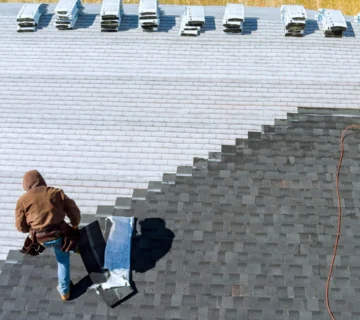


A homeowner in Milton called last February after her heating bill came in almost double what it had been the previous winter. Same house, same thermostat settings, same family patterns. Something had changed. When we went out to look, the roof was fine. The siding looked fine from the ground. But an infrared scan of the exterior walls showed something specific: a cold spot along the north side of the house where insulation had settled and left a gap running most of the length of the second floor. That gap wasn’t visible. It hadn’t been visible for probably three years. It just happened to become expensive that particular winter. Preparing your home’s envelope for winter matters because the envelope works as a connected system, and the weakest piece determines the performance of the whole.
The Envelope Is One System, Not Three
Most homeowners think of siding, roofing, and insulation as three separate things. That’s how the contractors talk about them. That’s how they get invoiced. That’s how the components sit on the property.
The winter performance of a house doesn’t recognize those distinctions.
Cold air pushes on the envelope from every direction during Alpharetta’s winter. When outdoor temperatures drop into the 20s at night and rebound into the 50s during the afternoon, the envelope handles a temperature swing of 30 degrees or more in a single day. Every gap, every failure point, every underperforming component gets tested by that cycling. The system fails at whatever component is weakest, not at some average level across all three.
This matters practically because homeowners who focus their winter preparation on one component while ignoring the others often see the same problems return. A new roof does nothing for a wall system that lets air infiltrate through gaps behind the siding. Improved insulation doesn’t help if roof failures are letting cold air into the attic space. New siding doesn’t address heat loss through an underinsulated envelope.
The winter preparation that actually improves comfort and reduces energy costs treats all three as parts of one system.
What Roofing Failures Look Like in North Georgia Winters
Roofing problems that would be manageable during summer weather compound during winter for specific reasons that are worth understanding.
The freeze-thaw cycling that characterizes Alpharetta winters is the primary mechanism. When water gets into small cracks in shingles, flashing details, or roof penetrations, it expands when it freezes. Each freeze-thaw cycle enlarges the crack slightly. Over the course of a winter with 15 or 20 such cycles, small imperfections become larger ones, and manageable problems become active leaks.
The winter roofing failures that show up in North Georgia:
- Flashing failures at chimneys, skylights, and roof-to-wall transitions where freeze-thaw stress opens sealed joints
- Cracked or displaced pipe boots that develop from repeated thermal cycling on the rubber components
- Ridge cap displacement from wind events that accompany winter storm systems
- Ice damming in the rare but occasional freezing events that produce sustained cold weather
- Gutter failures from ice weight during freeze events, which can pull gutters away from fascia
- Ventilation issues that produce condensation on the underside of roof decking during cold nights, leading to moisture problems in the attic
For homeowners with roofs approaching the 15 to 20 year mark, winter is when these accumulated issues typically produce visible symptoms. A roof inspection in late fall catches the developing issues while they can still be addressed before the winter weather makes them worse.

The Siding Failures That Get Overlooked
Siding gets less attention in winter preparation discussions than it deserves, partly because siding failures often produce subtle symptoms rather than dramatic ones.
The mechanisms specific to winter:
Wind-driven rain during winter storms tests the seals and terminations of siding systems more aggressively than summer rain does. Cold-weather rain often falls at higher velocities and with wind driving it into wall assemblies. Seals that hold up fine during summer showers can leak significantly during the first sustained winter storm.
Thermal expansion and contraction stresses siding materials differently in winter. Vinyl siding contracts noticeably in cold weather. Fiber cement siding expands and contracts less but still moves. Wood siding responds to moisture changes as much as temperature changes. All three can develop stressed joints, gaps at transitions, and failing sealant details during severe winter cycling.
The specific siding issues that develop or worsen in winter:
- Gaps at penetrations for utility connections, dryer vents, and exterior fixtures
- Failing sealant at trim boards, corners, and window surrounds
- Loose or displaced siding panels from wind events during winter storms
- Water intrusion through failed weather-resistive barriers behind the siding
- Peeling paint on wood or fiber cement siding that indicates moisture problems below the surface
- Wall staining that indicates water is moving through the wall assembly
The connection to the rest of the envelope is important. Air and water getting past the siding doesn’t stay in the wall cavity. It affects the insulation performance, produces conditions that can promote mold growth, and connects to the ceiling and attic assemblies. Siding failures rarely stay isolated.
The Insulation Question Nobody Asks Until February
Insulation is the envelope component homeowners think about least until it becomes obvious that something isn’t working.
For Alpharetta homes built before roughly 2000, the original insulation specifications often don’t meet current standards for winter performance. Attic insulation may have settled or compacted over decades. Wall insulation may be batts installed to code minimums that were never particularly high. Areas around penetrations, at rim joists, and in framing details often have gaps that were never sealed properly.
The visible symptoms of underperforming insulation during Alpharetta winters:
- Cold interior surfaces on walls and ceilings, particularly on exterior walls
- Uneven room temperatures with some spaces significantly colder than the thermostat setting
- Condensation on interior surfaces where cold materials meet humid indoor air
- High heating bills during cold snaps that don’t match neighboring homes with similar square footage
- Drafts at outlets, switches, and other envelope penetrations
- Ice-cold floors on second stories over unconditioned garages or exterior overhangs
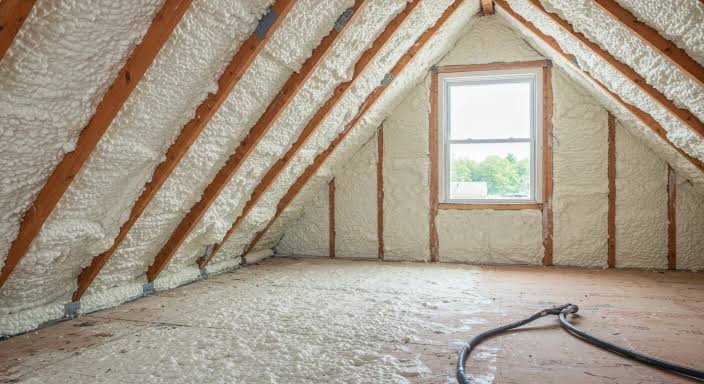
Adding spray foam insulation to specific problem areas is often the highest-impact winter preparation improvement available. Unlike batt insulation, spray foam air-seals and insulates in one application, which addresses both heat loss and air infiltration together. For homes with attic access, a professional assessment can identify whether targeted spray foam work in specific problem areas would produce measurable performance improvements.
What Happens When the Three Systems Interact Poorly
The reason envelope preparation matters as a system rather than three separate projects is that the components produce compound failures when they don’t work together.
An example that shows up regularly in Alpharetta homes:
The roof has a small flashing issue that admits water into the attic space during winter rain. The attic insulation is compressed in the area where water intrusion occurs, which reduces its performance. The reduced insulation performance creates a cold spot on the ceiling below. The cold ceiling spot creates condensation conditions on humid winter days. The condensation contributes to material deterioration, which eventually shows up as ceiling stains, paint problems, or mold conditions.
None of these individual issues would be a major problem on its own. Together, they create a compounding situation that produces the “how did this get so bad” experience homeowners have when they eventually discover it.
The reverse pattern shows up too. A well-maintained roof and adequate insulation can’t overcome siding failures that let cold air into wall cavities. A quality siding installation doesn’t help if the roof is leaking above it. Each component depends on the others functioning correctly for the whole envelope to perform as designed.
For homeowners preparing for winter, this interaction is what makes a systems-level assessment worthwhile. Individual component inspections catch individual problems. A whole-envelope assessment catches interaction problems that individual inspections miss.
Where to Actually Start With Winter Envelope Preparation
For most Alpharetta homeowners, the highest-return starting point for winter envelope preparation is a professional inspection of all three components conducted together in late fall. This produces the information needed to make decisions about where the actual weak points are.
The typical assessment includes:
- Roof inspection covering shingle condition, flashing details, ventilation, and gutter systems
- Attic evaluation for insulation performance, air sealing, and any signs of roof-related moisture
- Exterior wall inspection covering siding condition, seals, terminations, and any visible signs of water intrusion
- Envelope assessment including infrared imaging where available to identify hidden cold spots and air infiltration
- Written documentation of findings with prioritized recommendations
The recommendations that emerge from this kind of assessment often surprise homeowners. The obvious problems (visible siding damage, roof shingles that look worn) may or may not be the actual priorities. The invisible problems (insulation gaps, hidden air infiltration paths, developing flashing failures) often produce more of the winter performance issues than the visible ones do.
For homeowners working with a residential roofing contractor experienced in envelope assessment, the fall inspection produces a prioritized plan that addresses the actual weak points rather than the visible ones.
The Envelope That Actually Holds Up
Preparing your home’s envelope for winter isn’t a checklist you complete once. It’s a system assessment that identifies where your specific property’s weak points are and what work would produce the biggest performance improvements. Alpharetta homeowners who treat siding, roofing, and insulation as a connected system consistently end up with lower heating bills, more comfortable interiors, and fewer winter maintenance surprises than those who address each component in isolation.
Get a Systems-Level Envelope Assessment Before Winter Arrives
The team at Transcend Roofing Systems is ready to help. Contact us today to schedule a professional envelope assessment at your Alpharetta, GA property and identify where targeted preparation work will produce the biggest winter performance improvements.