
Why Do Storm-Damaged Roofs Require Prompt Professional Evaluation in Alpharetta?
North Georgia weather presents distinct environmental stresses to residential structures throughout the calendar year. Severe weather systems across Fulton County bring sudden temperature drops, high wind shear, heavy precipitation, and intense hail strikes that compromise building envelopes. When hail impacts a residential roof, individual shingle tabs absorb severe mechanical energy. This impact dislodges protective ceramic granules, exposing the raw asphalt matrix underneath to moisture and harsh solar radiation.
An asphalt layer left vulnerable to continuous thermal expansion rapidly degrades. Direct sunlight bakes the exposed binder, creating microscopic fractures across individual shingle surfaces. Rainwater subsequently migrates through these fractures, soaking into the underlying synthetic felt underlayment and reaching the structural plywood decking below. Once water penetrates the decking layer, moisture moves inward, causing timber rot, attic insulation saturation, and interior ceiling staining. Requesting formal evaluations for storm damage immediately following major weather events allows property owners to identify subtle material compromises. Identifying these subtle issues early stops secondary moisture migration from weakening interior structural framing or destroying drywall finishes.
How Does Navigating Insurance Documentation Support Full Structural Recovery?
Filing a residential property claim following severe weather often introduces complex administrative challenges for homeowners. Insurance adjusters require concrete physical proof, itemized loss assessments, and definitive evidence establishing that property damage resulted directly from a specific storm event. Submitting incomplete loss reports or vague photo logs frequently leads to partial claim denials, reduced payout values, or prolonged administrative delays.

process significantly. When experienced technicians conduct joint property inspections alongside insurance adjusters, they walk each roof slope together to identify subtle damage indicators. Technicians highlight directional hail hit patterns, creased shingle margins, lifted valley flashing, and compromised pipe boots that adjusters might miss during a brief walk-through. Professional insurance assistance connects carrier policy requirements with the physical restoration work necessary to stabilize your residence. Documenting exact material losses and maintaining clear communication with adjusters guarantees that claim settlements accurately reflect the full scope of property work required to restore structural stability.
When Is Spot Repair Sufficient Compared to Complete System Replacement?
Deciding between targeted patchwork and full system installation requires analyzing overall roof age, surface wear, and the extent of material degradation across all slopes. Minor localized impacts from wind gusts, such as isolated torn shingle tabs or minor ridge cap detachment, can generally be resolved with targeted fixes. Applying a focused roof repair stops immediate water entry, secures exposed underlayment, and maintains existing protection without requiring unnecessary capital expenditure.
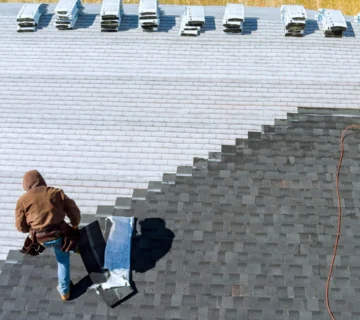
However, widespread hail impact across multiple roof slopes alters structural requirements completely. When granule loss extends across major field shingles, patching individual sections leaves uneven protection and creates mismatched aging cycles across the structure. In these scenarios, executing a complete roof replacement establishes a uniform protective envelope across the entire house. Installing modern GAF roofing materials provides consistent thermal defense, reinforced leak barriers, and improved wind resistance. Selecting the appropriate structural intervention protects underlying framing, preserves long-term home value, and maintains property appearance across local Alpharetta neighborhoods.

Why Are Exterior Water Management Systems Essential for Foundation Protection?
Roofing surfaces represent only the initial phase of effective residential water management; directing torrential rain runoff away from structural footings is equally critical for home preservation. Heavy downpours in suburban Georgia release hundreds of gallons of water per minute off slope edges. If perimeter drainage channels become clogged, misaligned, or bent by falling tree limbs, rainwater spills over fascia boards, cascades down siding, and pools directly around home foundations.
Excess rainwater pooling near foundation footings generates extreme hydrostatic pressure against exterior basement and crawlspace walls. Over time, this pressure causes concrete cracking, basement wall shifting, and severe internal moisture seepage. Proper gutter systems establish dedicated, high-capacity channels that collect surface runoff and direct water safely away from foundation walls. Coupling seamless gutters with heavy-duty downspouts prevents soil erosion, preserves perimeter landscaping, and shields the foundational footprint of the home from long-term water damage.
Transcend Roofing Systems delivers the technical skill required to protect residential structures throughout Alpharetta. Navigating seasonal weather events requires a dedicated partnership with local professionals who examine every structural component, value property integrity, and communicate directly with insurance carriers.
To address minor roofing issues early, prevent structural damage, maintain property equity, and keep your family safe, schedule your free roof inspection today.